2026 Predictions from Activate Partners

Activate’s partners are calling their shots for 2026—where power, resilience, AI-native operations, robotics, and space-enabled infrastructure are creating the next wave of real-world winners. Plus: a few bold (and very opinionated) World Cup predictions.
Here’s what they said:
Looking back on 2025, what are your biggest learnings in our core markets, and how have they influenced the way you’re thinking about investing going forward?
- David Lincoln: Physical bottlenecks such as transmission, supply chains, service workforces, etc., are increasingly fragile and just as important, if not more, than the optimization software layers on top. Going forward, we’re going to see more emphasis on who pays when systems fail, not just when they expand; so we expect to see increased investment in businesses that address these systemic challenges in our core infrastructure.
- Anup Jacob: Power availability is now a first-order constraint, not an input assumption. Crusoe and XNRGY highlighted how compute, cooling, and energy are converging markets. We see the opportunity to invest growth capital into businesses that are unlocking speed to power.
- Jon Guerster: In 2025, we were so encouraged to watch several Activate portfolio companies implement AI–native culture resets to their whole organization. They took the time to fundamentally reassess their products, their operations and how their people leveraged AI to do perform their roles. In these companies, it was amazing to watch how fast these companies saw efficiency gains without needing to grow their teams. Of course, you can guess what we’re hoping to see across the rest of our portfolio in 2026.
What is one key theme or shift you expect to define the opportunity set in our sectors over the next 12 months, and how is Activate positioned to benefit from it?
- Anup: The defining theme over the next year is power- and compute-constrained growth. As AI infrastructure scales, we’re seeing energy-efficient data centers, the application layer built on top of that infrastructure, and industrial energy loads all intersect with rising power prices and real physical constraints. Activate is well positioned here because our active watchlist of roughly 300 companies is constantly refreshed, and about a third are supporting the buildout of clean, firm power through technology or software. Many of these businesses are already showing rapid topline growth and strong margins, which creates a clear opportunity for growth capital to be deployed at meaningful scale.
- Eric Meyer: Resilience is crossing the line from “nice to have” to non-discretionary spend that’s driven less by ideology and more by physics, insurance requirements, and the realities of infrastructure. For the first time in a while, insurers, grid operators, and infrastructure owners are pulling in the same direction. Additionally, flexibility at the edge of the grid is being increasingly rewarded, and that’s exactly where Activate has been focused with companies like Voltus and Lunar.
- Paul Jordan: One of the defining shifts over the next year is the continued evolution of labor, where capital’s share of GDP will expand as AI and robotics automate an ever-broader set of tasks once done by people. Activate is positioned to benefit because we focus on integrated, verticalized AI-plus-robotics platforms that fundamentally reshape cost structures across legacy and next-generation infrastructure categories.
With SpaceX potentially going public later this year, and the broader rise of space-enabled infrastructure garnering a lot of capital, how does Activate think about investing in this wave?
- Raj Atluru: If you zoom out past the SpaceX IPO headlines, you’ll find that the real opportunity is downstream from launch as space data becomes cheap, persistent, and reliable. Activate focuses on the intersection of where sensing, monitoring, and resiliency applications plug directly into physical infrastructure workflows and actually change how assets are built, operated, and protected.
- Paul: We’re less focused on launch itself, where scale economics are already driving toward a clear monopoly or oligopoly, and much more interested in what comes next: particularly next-generation communications, from satellite constellations down to the terrestrial infrastructure that enables them, where there are large, durable markets across both defense and commercial use cases. At a deeper level, the question we keep coming back to is how existing, earthbound infrastructure has to evolve to support a space-enabled economy.
- Anup: SpaceX was founded in 2002 and has raised approximately $12B from investors along the way. When the company IPOs, it will create an opportunity for liquidity for investors which may be the unlock for other long dated tech assetsin PE or VC portfolios. There are currently over 100 companies that are still private that are worth over $10B that are all having Board discussions about the pros/cons/timing of going public. The rise of retail investors and the anticipatedgiant wave of liquidity will have ramifications for how we think about exits (feels like the window is opening), valuations (trickle down from public to private), and a rebound in new investment activity.
Labor shortages are becoming more structural across the markets we focus on. Beyond the two businesses we’ve already backed addressing these challenges, where do you see the biggest opportunities over the next few years to meaningfully reduce dependence on scarce labor?
- Jon: Most seriously: Field Operations. Bringing automation and robotics to field services across many industries is a trillion-dollar opportunity. Infravision and Aerones are energy market focused, but we’re seeing so many similarly impactful applications, helping existing field teams do their jobs more efficiently, effectively, and safely. Heavy construction, trade workforces, food service, and mining are all already in motion adopting these applications. Longshot: Humanoid Venture Capitalists. Since we’ll apparently reach AGI in 2026, venture capital is obviously next in line for disruption by Patagonia-wearing humanoids who work 24×7×365, attend every conference and happy hour, and politely decline every deal as “not a fit for our strategy,” having correctly concluded that no AGI-enabled entity in its right mind would make such risky asset allocation decisions.
- Paul: The biggest near-term opportunity is taking people out of dangerous, repetitive field work where labor is scarce, injury risk is real, and automation actually pencils. We’re focused on task-specific robotics that can be deployed today and earn their keep, with the view that these systems will gradually expand in scope over time, rather than betting on generalized humanoids where the capex, reliability, and ROI are still hard to justify in most real-world environments. In the long run, we expect task-specific and general-purpose robots will ultimately converge depending on the use case.
Where have you seen the greatest real, measurable impact from AI adoption in our portfolio so far, and what are you most excited about as founders continue to integrate AI into their products and operations in 2026?
- Eric: The most tangible impact we’ve seen so far is in areas like risk assessment, pricing accuracy, and customer engagement, where AI is directly improving unit economics rather than just productivity optics. What’s most excitingheading into 2026 is the operating leverage this creates, as AI quietly replaces incremental service headcount and becomes invisible infrastructure embedded across products and operations rather than a standalone feature.
- David: The most real impact we’ve seen from AI so far is where it compresses decision timelines or adds leverage to teams, rather than trying to replace humans outright. We’ve seen this in areas like go-to-market support, system optimization, customer service, safety, and forecasting. In 2026, I’m excited about seeing AI agents embedded directly into operations, not just sitting in dashboards, with SecOps and industrial process controls being early examples of where this becomes mission-critical infrastructure rather than a nice-to-have.
Put your serious hat aside for a minute. If you had to make one bold prediction for the 2026 World Cup, what would it be?
- Raj: All Messi, all the time. Is another magical run in the cards?
- Anup: Morocco becomes the first team from Africa to reach the Finals and knocks out crowd favorite Brazil early in the tournament. Go Lions!
- Paul: The US makes its first semi-finals appearance since 1930.
- Eric: England makes a good run, but everyone still argues they should’ve done more with that squad.
- David: Germany looks like Germany again and is a real problem by the knockouts.
- Jon: Spain’s 18-year-old Lamine Yamal hits a new level of worldwide visibility, even non-soccer fans will know his name and likeness.

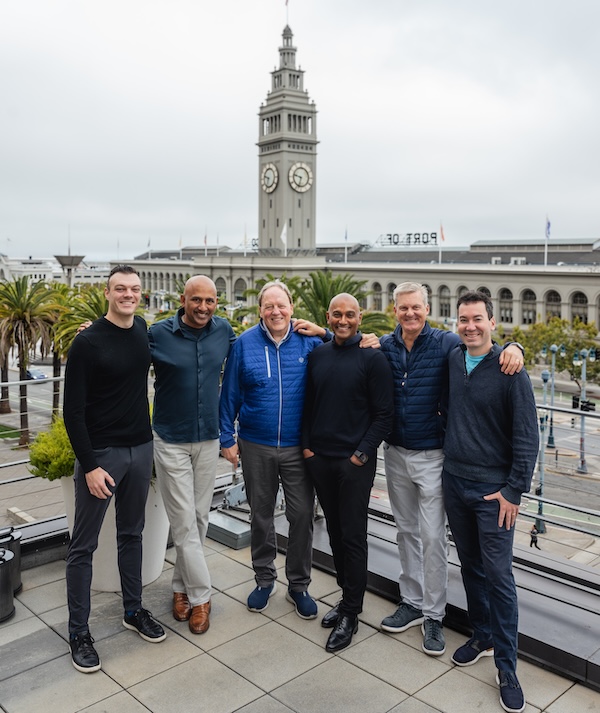
Activate’s partners are calling their shots for 2026—where power, resilience, AI-native operations, robotics, and space-enabled infrastructure are creating the next wave of real-world winners. Plus: a few bold (and very opinionated) World Cup predictions.
Here’s what they said:
Looking back on 2025, what are your biggest learnings in our core markets, and how have they influenced the way you’re thinking about investing going forward?
- David Lincoln: Physical bottlenecks such as transmission, supply chains, service workforces, etc., are increasingly fragile and just as important, if not more, than the optimization software layers on top. Going forward, we’re going to see more emphasis on who pays when systems fail, not just when they expand; so we expect to see increased investment in businesses that address these systemic challenges in our core infrastructure.
- Anup Jacob: Power availability is now a first-order constraint, not an input assumption. Crusoe and XNRGY highlighted how compute, cooling, and energy are converging markets. We see the opportunity to invest growth capital into businesses that are unlocking speed to power.
- Jon Guerster: In 2025, we were so encouraged to watch several Activate portfolio companies implement AI–native culture resets to their whole organization. They took the time to fundamentally reassess their products, their operations and how their people leveraged AI to do perform their roles. In these companies, it was amazing to watch how fast these companies saw efficiency gains without needing to grow their teams. Of course, you can guess what we’re hoping to see across the rest of our portfolio in 2026.
What is one key theme or shift you expect to define the opportunity set in our sectors over the next 12 months, and how is Activate positioned to benefit from it?
- Anup: The defining theme over the next year is power- and compute-constrained growth. As AI infrastructure scales, we’re seeing energy-efficient data centers, the application layer built on top of that infrastructure, and industrial energy loads all intersect with rising power prices and real physical constraints. Activate is well positioned here because our active watchlist of roughly 300 companies is constantly refreshed, and about a third are supporting the buildout of clean, firm power through technology or software. Many of these businesses are already showing rapid topline growth and strong margins, which creates a clear opportunity for growth capital to be deployed at meaningful scale.
- Eric Meyer: Resilience is crossing the line from “nice to have” to non-discretionary spend that’s driven less by ideology and more by physics, insurance requirements, and the realities of infrastructure. For the first time in a while, insurers, grid operators, and infrastructure owners are pulling in the same direction. Additionally, flexibility at the edge of the grid is being increasingly rewarded, and that’s exactly where Activate has been focused with companies like Voltus and Lunar.
- Paul Jordan: One of the defining shifts over the next year is the continued evolution of labor, where capital’s share of GDP will expand as AI and robotics automate an ever-broader set of tasks once done by people. Activate is positioned to benefit because we focus on integrated, verticalized AI-plus-robotics platforms that fundamentally reshape cost structures across legacy and next-generation infrastructure categories.
With SpaceX potentially going public later this year, and the broader rise of space-enabled infrastructure garnering a lot of capital, how does Activate think about investing in this wave?
- Raj Atluru: If you zoom out past the SpaceX IPO headlines, you’ll find that the real opportunity is downstream from launch as space data becomes cheap, persistent, and reliable. Activate focuses on the intersection of where sensing, monitoring, and resiliency applications plug directly into physical infrastructure workflows and actually change how assets are built, operated, and protected.
- Paul: We’re less focused on launch itself, where scale economics are already driving toward a clear monopoly or oligopoly, and much more interested in what comes next: particularly next-generation communications, from satellite constellations down to the terrestrial infrastructure that enables them, where there are large, durable markets across both defense and commercial use cases. At a deeper level, the question we keep coming back to is how existing, earthbound infrastructure has to evolve to support a space-enabled economy.
- Anup: SpaceX was founded in 2002 and has raised approximately $12B from investors along the way. When the company IPOs, it will create an opportunity for liquidity for investors which may be the unlock for other long dated tech assetsin PE or VC portfolios. There are currently over 100 companies that are still private that are worth over $10B that are all having Board discussions about the pros/cons/timing of going public. The rise of retail investors and the anticipatedgiant wave of liquidity will have ramifications for how we think about exits (feels like the window is opening), valuations (trickle down from public to private), and a rebound in new investment activity.
Labor shortages are becoming more structural across the markets we focus on. Beyond the two businesses we’ve already backed addressing these challenges, where do you see the biggest opportunities over the next few years to meaningfully reduce dependence on scarce labor?
- Jon: Most seriously: Field Operations. Bringing automation and robotics to field services across many industries is a trillion-dollar opportunity. Infravision and Aerones are energy market focused, but we’re seeing so many similarly impactful applications, helping existing field teams do their jobs more efficiently, effectively, and safely. Heavy construction, trade workforces, food service, and mining are all already in motion adopting these applications. Longshot: Humanoid Venture Capitalists. Since we’ll apparently reach AGI in 2026, venture capital is obviously next in line for disruption by Patagonia-wearing humanoids who work 24×7×365, attend every conference and happy hour, and politely decline every deal as “not a fit for our strategy,” having correctly concluded that no AGI-enabled entity in its right mind would make such risky asset allocation decisions.
- Paul: The biggest near-term opportunity is taking people out of dangerous, repetitive field work where labor is scarce, injury risk is real, and automation actually pencils. We’re focused on task-specific robotics that can be deployed today and earn their keep, with the view that these systems will gradually expand in scope over time, rather than betting on generalized humanoids where the capex, reliability, and ROI are still hard to justify in most real-world environments. In the long run, we expect task-specific and general-purpose robots will ultimately converge depending on the use case.
Where have you seen the greatest real, measurable impact from AI adoption in our portfolio so far, and what are you most excited about as founders continue to integrate AI into their products and operations in 2026?
- Eric: The most tangible impact we’ve seen so far is in areas like risk assessment, pricing accuracy, and customer engagement, where AI is directly improving unit economics rather than just productivity optics. What’s most excitingheading into 2026 is the operating leverage this creates, as AI quietly replaces incremental service headcount and becomes invisible infrastructure embedded across products and operations rather than a standalone feature.
- David: The most real impact we’ve seen from AI so far is where it compresses decision timelines or adds leverage to teams, rather than trying to replace humans outright. We’ve seen this in areas like go-to-market support, system optimization, customer service, safety, and forecasting. In 2026, I’m excited about seeing AI agents embedded directly into operations, not just sitting in dashboards, with SecOps and industrial process controls being early examples of where this becomes mission-critical infrastructure rather than a nice-to-have.
Put your serious hat aside for a minute. If you had to make one bold prediction for the 2026 World Cup, what would it be?
- Raj: All Messi, all the time. Is another magical run in the cards?
- Anup: Morocco becomes the first team from Africa to reach the Finals and knocks out crowd favorite Brazil early in the tournament. Go Lions!
- Paul: The US makes its first semi-finals appearance since 1930.
- Eric: England makes a good run, but everyone still argues they should’ve done more with that squad.
- David: Germany looks like Germany again and is a real problem by the knockouts.
- Jon: Spain’s 18-year-old Lamine Yamal hits a new level of worldwide visibility, even non-soccer fans will know his name and likeness.